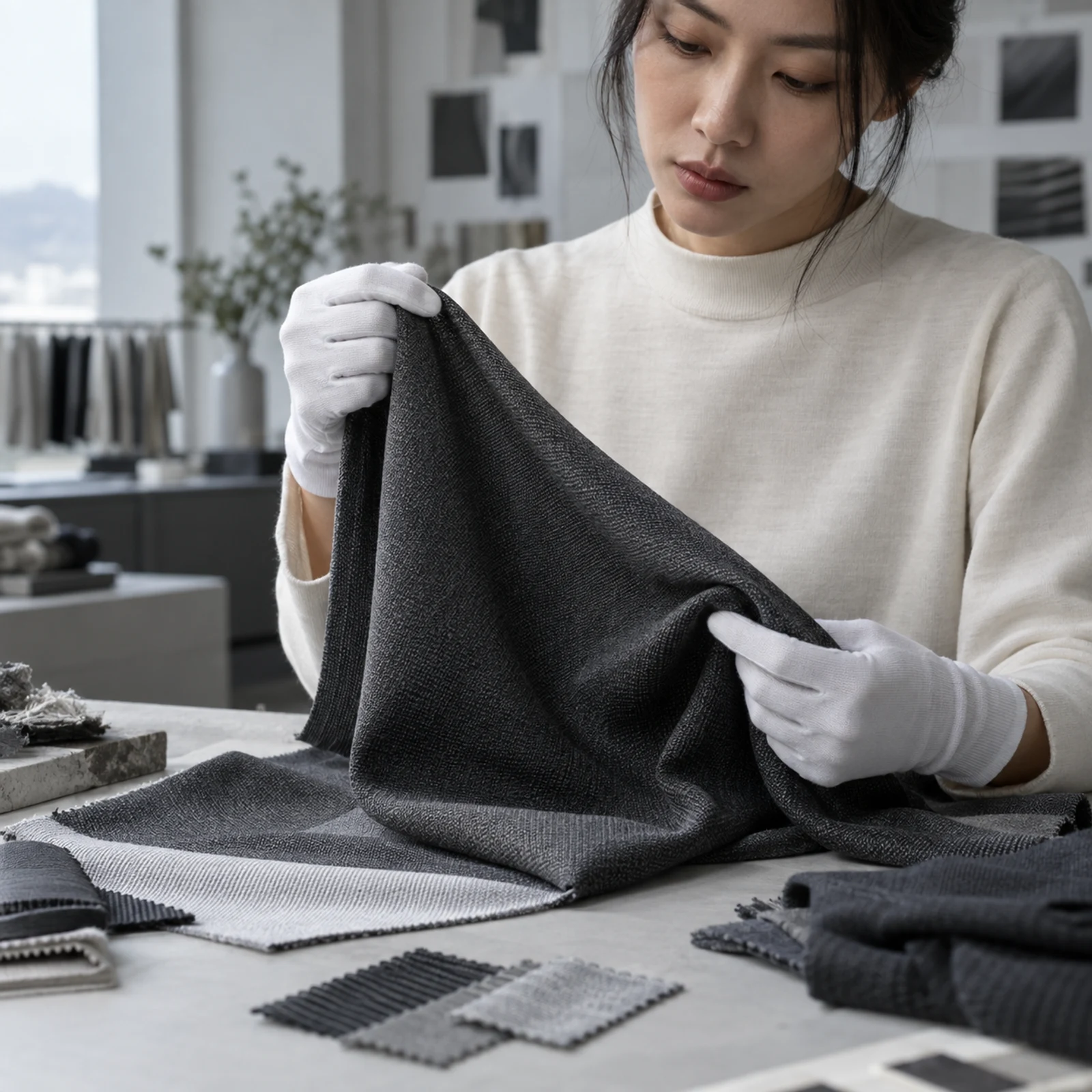
From the next-to-skin feel of activewear to the structure of an outdoor fabric, turn a creative direction into specifications that can be sampled, discussed and tested. Connect your brand’s material development brief with Taiwan’s performance textile sector.
Choosing a fabric takes more than one performance figure. Weight, construction, stretch recovery, handle and garment use belong in the same conversation. This development pathway centres on a shared specification for designers, material engineers and sourcing teams, creating a consistent basis for sample comparisons, colour approval and production handover.
Start with the intended yoga, running or training garment. Review fibre composition, fabric weight, stretch direction, recovery and skin feel. Translate moisture-management and drying requirements into agreed test conditions while considering opacity, dimensional stability and appearance after washing.
Evaluate construction, body, abrasion requirements and finishing options for jackets, trousers or lightweight layers. Define separate methods and targets for water repellency, breathability or waterproofness where relevant, then consider seams, trims and garment construction alongside the fabric.
Build a comparison brief from a reference swatch, colour direction or garment concept. Explore trade-offs between fibres, constructions and finishes. Requests for recycled or other specified materials should be tied to composition data and available documentation for the particular article, not a generic material label.
Share the intended use, target weight, handle, colours, expected volume and launch window. Reference swatches help explain the direction, but each purchasing specification still needs agreement. Establish information-sharing arrangements before exchanging confidential designs.
02
Compare samples and agree conditions
Review fabric swatches and lab dips, recording width, composition, appearance and functional targets. Agree on test methods, preparation, washing conditions and acceptance ranges so that results obtained under different conditions are not treated as directly comparable.
03
Move from trial to production
Use trial feedback to review cutting, sewing, shrinkage and colour variation before approving the reference sample and specification revision. Minimum quantities, minimums per colour, lead times, packing and document requirements are discussed for the confirmed fabric and process.
03 — Q & A
Material selection
01Can development start with a garment concept rather than a fabric specification?
Yes. Outline the end use, wearing conditions, desired handle and anticipated volume. A reference garment or swatch can establish a useful comparison point before fibre composition, construction, weight and performance targets are agreed.
02How should moisture management, drying or abrasion performance be assessed?
Agree on a relevant test method, sample conditions and target before reviewing results for the specific fabric. Washing history, wash cycles and finishing must be consistent when comparing samples. A fabric test does not establish the performance of a complete garment.
03Can recycled fibres or material documentation be specified?
State the fibre, required proportion and intended use of the documents in the brief. Material origin, composition evidence and the scope of any certification must be checked for the particular article and supply arrangement; the same documentation should not be assumed for every material.
04What information is useful before requesting a quotation?
Provide the target article, number of colours, volume per colour, development schedule and delivery destination. Sampling charges, minimum quantities, production timing and shipping terms require separate agreement; an image does not indicate stock availability or price.
LET’S BUILD YOUR NEXT CHAPTER
Discuss this website
Bring your brand, products and international market into focus.