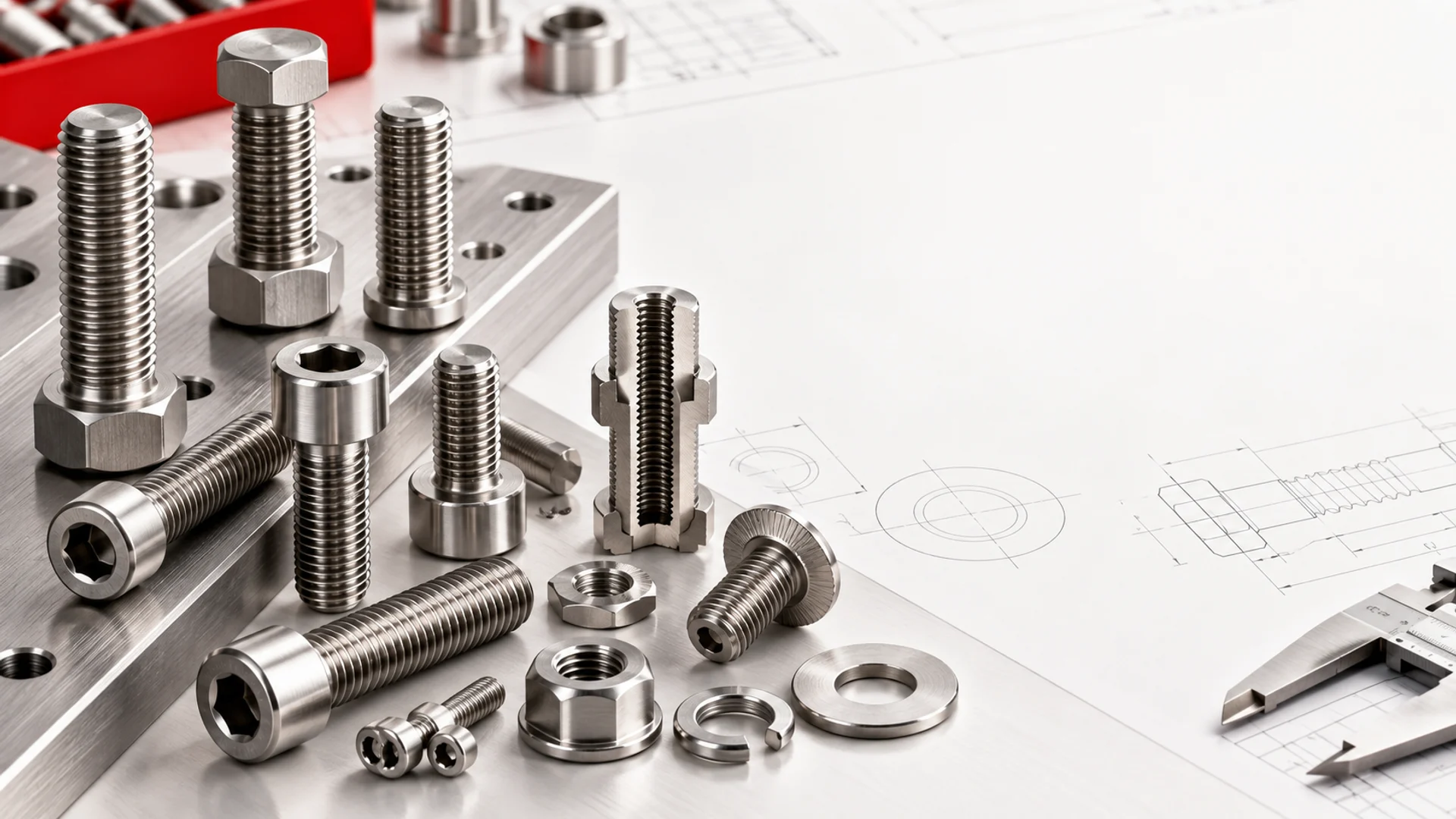
Turn thread geometry, material and finish into a clear technical brief, informed by the assembly environment and delivery schedule. Build a common language for engineering and procurement, from drawing review to an RFQ for machinery, industrial assemblies and custom components.
Fastener selection goes beyond diameter and length. Preload requirements, joined materials, service conditions and assembly methods all shape the specification. This collection explores procurement from Taiwan’s precision-fastener sector, separating standard hardware, drawing parts and assembly components so engineering and purchasing teams can compare offers on the same basis.
Fastener selection goes beyond diameter and length. Preload requirements, joined materials, service conditions and assembly methods all shape the specification. This collection explores procurement from Taiwan’s precision-fastener sector, separating standard hardware, drawing parts and assembly components so engineering and purchasing teams can compare offers on the same basis.
01
Standard screws and bolts
Build a parts list around an explicitly specified standard and edition, dimensions, pitch, head style and strength requirements. Review tool access, joint thickness and mating components for machinery and industrial assembly, rather than substituting parts by appearance or name alone.
Start with the drawing revision, tolerances and functional surfaces for special heads, steps, shoulders or non-standard dimensions. Include material, heat treatment and inspection requirements when discussing forming, machining and sample approval.
Treat the nut, washer and bolt as elements of one joint. Compare thread fit, bearing surfaces, finishes and packaging needs. A clear bill of materials and identification method supports trial assembly, incoming inspection and subsequent batch control.
Prepare a drawing or standard specification, material, finish, order quantity and estimated annual demand. Distinguish mandatory requirements from negotiable items. Agree on confidentiality and file-transfer arrangements before sharing sensitive drawings.
02
Align samples and acceptance
Confirm critical dimensions, thread inspection, material documentation and other acceptance requirements. Identify any finish or friction conditions relevant to assembly. Agree separately on sample quantities, test methods and the approval sequence.
03
Review batches and delivery
Assess timing against specification maturity, raw material, manufacturing and inspection needs. State packaging, batch identification, transport terms and destination in the quotation. Separate sample timing from production lead time; an early estimate is not a delivery commitment.
03 — Q & A
Specification guide
01What information is needed for a fastener quotation?
Provide a standard reference or drawing, dimensions and pitch, material or strength requirements, finish, quantity and delivery destination. If the specification is incomplete, flag open items so both teams can identify what affects price and feasibility.
02Are DIN and ISO fasteners automatically interchangeable?
No. Similar names do not establish interchangeability. Specify the standard number and edition, then compare dimensions, threads, head geometry and assembly requirements. Any alternative should be approved by the team responsible for design and acceptance.
03How should stainless steel and carbon steel be compared?
Consider the service environment, mechanical requirements, joined materials and finish together. Do not assume suitability from the material name alone. Describe indoor or outdoor use, media exposure, temperature and assembly conditions for engineering review.
04Can sampling be separated from production?
An enquiry can define two stages with separate quantities, inspection and documentation requirements. Sample manufacturing method, cost and timing require individual confirmation. Sample approval does not itself establish a production delivery date.
LET’S BUILD YOUR NEXT CHAPTER
Discuss this website
Bring your brand, products and international market into focus.