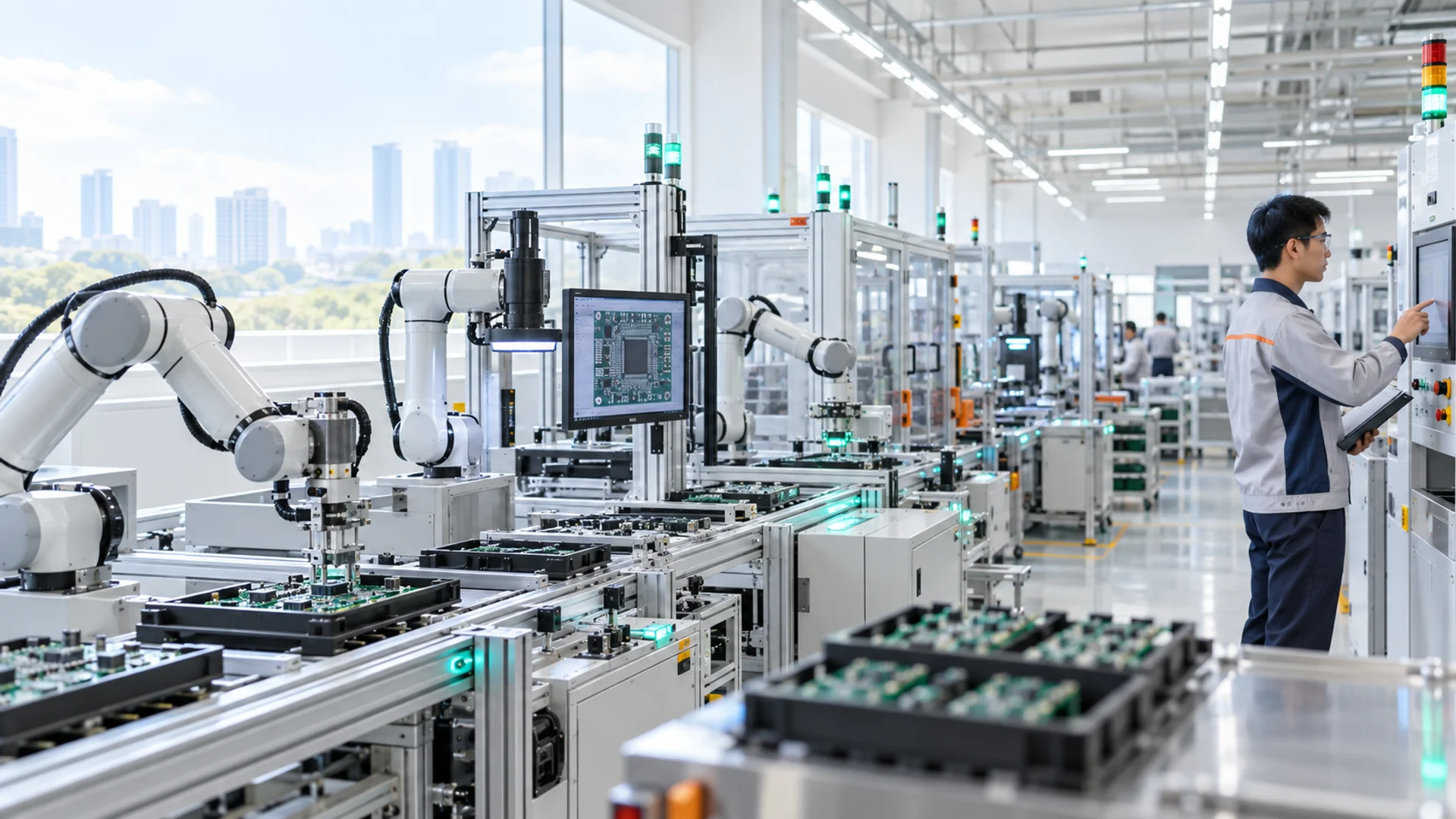
Connected equipment. A production line moving forward.
From a single loading station to integrated robotics, machine vision and controls. Plan automation around the conditions, operators and production rhythm of your factory in Vietnam, with systems that can be understood, maintained and expanded in stages.
Automation connects parts, machines, people and information—not just new equipment. A productive discussion with a Taiwan equipment integrator can begin with a process map: identify waiting and handling, define quality decisions and clarify interfaces between machines. For a Vietnam project, consider operating languages, installed equipment, spare parts and training within the same brief, so engineering, procurement and maintenance can assess the proposal together.
01
Robotic loading and handling
Configure a cell around part weight, orientation, gripping and adjacent equipment. Review trays, fixtures, sensing, changeover and operator access together. Cycle-time assessment includes picking, placement, machine waiting and fault recovery—not robot motion alone.
Define features, defect boundaries and inspection criteria before selecting lighting, cameras and part positioning. Test representative conforming and defective samples. Agree on false-reject handling, image retention, product identification and access to inspection records.
Bring machine states, alarms, operator interfaces and production data into a maintainable controls architecture. Review installed PLCs, communication interfaces and software access. Separate monitoring from machine control and establish network segmentation, backups and version management.
Document process flow, floor space, utilities, shifts and product variation. Establish a baseline using current cycle times and fault records. Identify the first implementation phase, available shutdown windows and items requiring a site survey before comparing proposals.
02
Review the concept and acceptance plan
Evaluate layout, safeguarding, changeover, interfaces and maintenance access. Before purchase, agree on factory and site acceptance tests, samples, documentation, participants and responsibilities. Keep estimated performance distinct from agreed acceptance criteria.
03
Commission, train and hand over
Schedule installation and trials against site readiness. Confirm Vietnamese or other required operating documentation. Hand over alarm procedures, backups, spare-parts lists and maintenance tasks; define remote and on-site support scope, hours and charges in the agreement.
01Can we automate one station before expanding the line?
A repetitive task with clearly defined part conditions is a useful starting point. Plan material flow, signals and safety interfaces for potential expansion, while recognising that future equipment and process changes still require engineering review.
02What should a factory in Vietnam prepare for an initial discussion?
Start with a process map, floor layout, part dimensions and weights, current cycle times, shifts and key problems. Videos and equipment details support assessment. Agree on confidentiality and sharing scope before exchanging sensitive drawings or programs.
03How do we establish whether existing machines can be integrated?
Check machine models, controllers, signals, protocols, software access and manufacturer restrictions. Confirm usable interfaces individually. An Ethernet port alone does not establish that a machine supports control integration or complete data access.
04How should local support in Vietnam be arranged?
Include the factory location, service language, operating hours and acceptable downtime in the enquiry. Ask the proposal to define remote assistance, site personnel, spare parts and upgrade responsibilities. Local service availability depends on the actual supplier and agreement.
LET’S BUILD YOUR NEXT CHAPTER
Discuss this website
Bring your brand, products and international market into focus.